
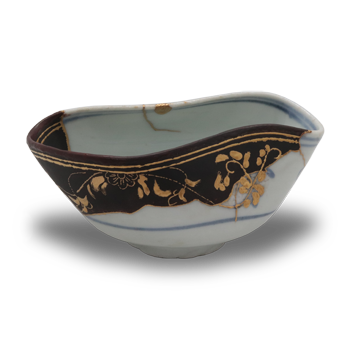
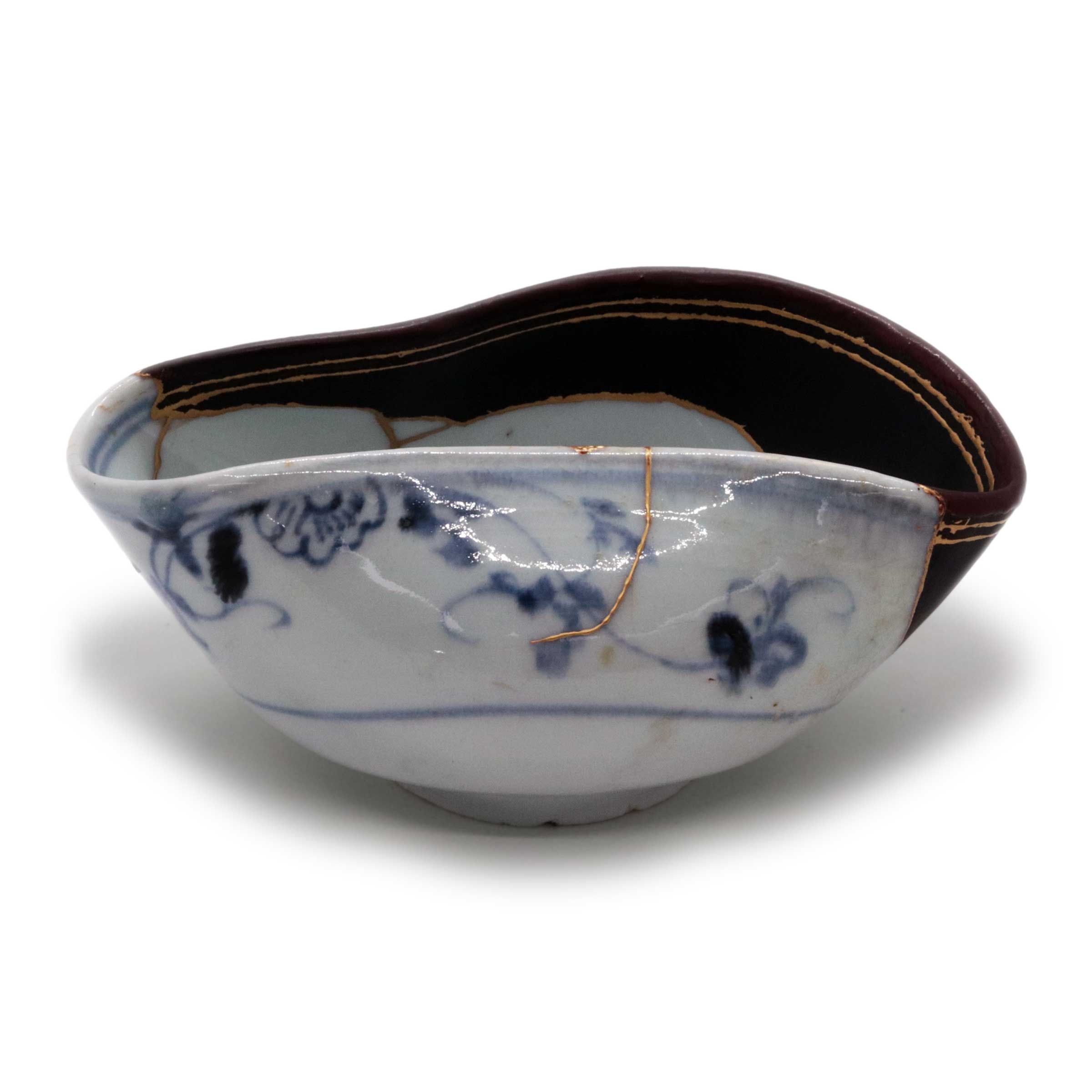
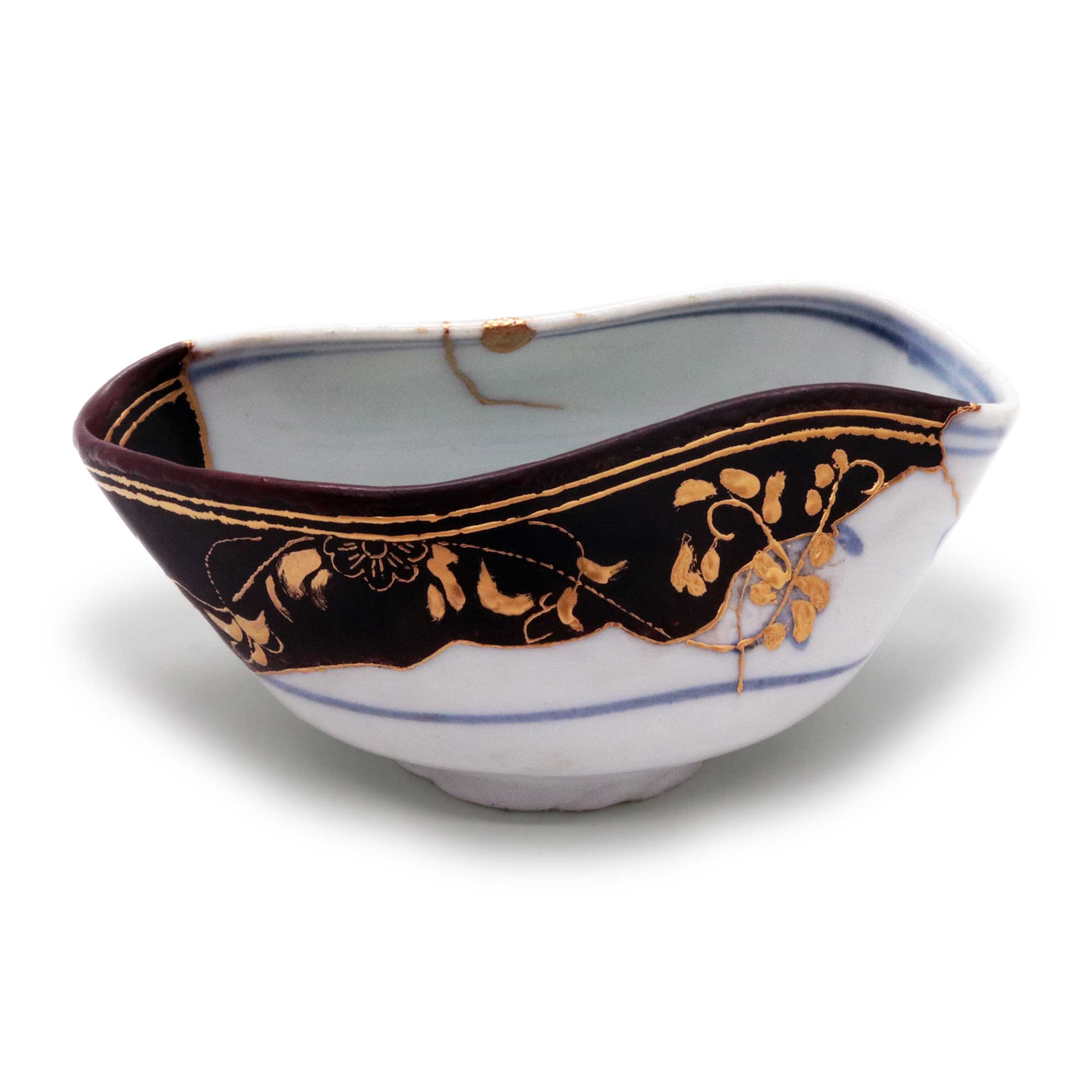
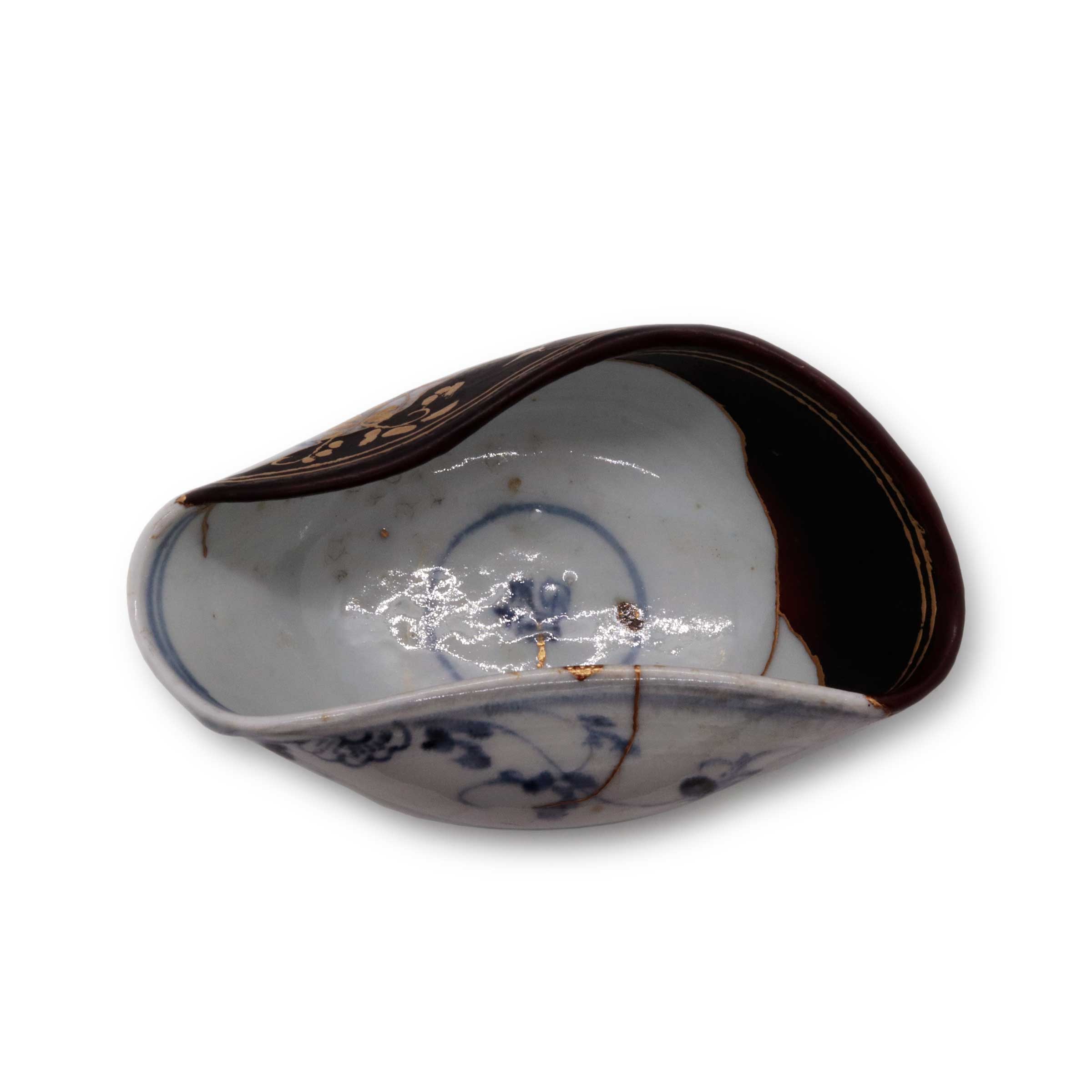
A unique landscape woven from “destruction and rebirth.” This original mukozuke blends fragments of early Imari porcelain with contemporary makie lacquer art.
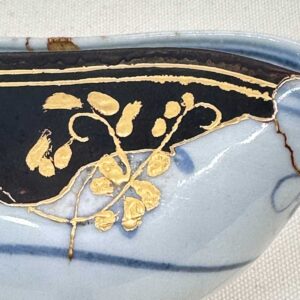
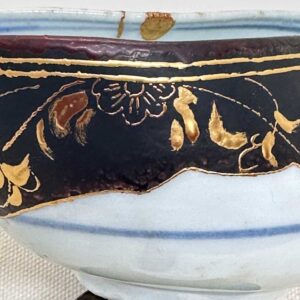
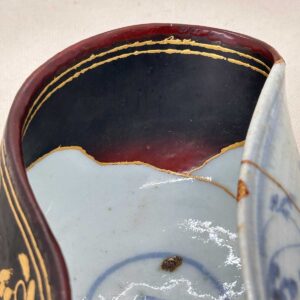
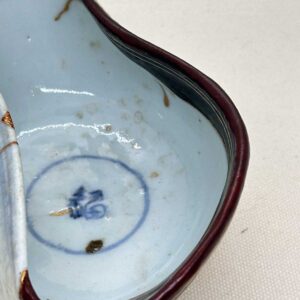
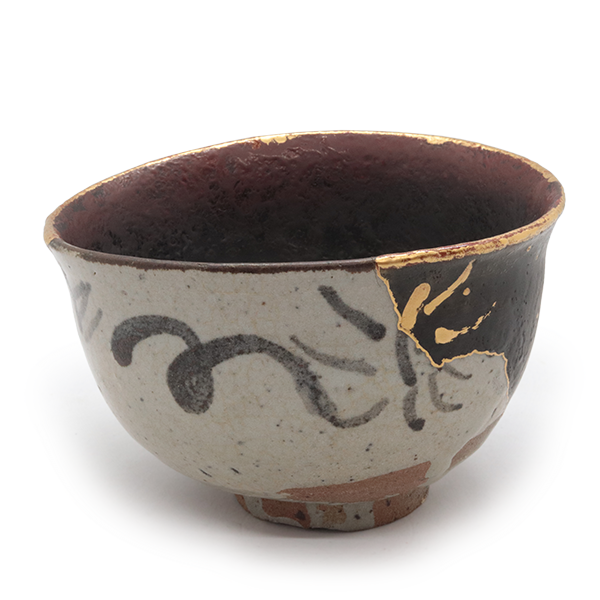
【Background】 Crafted using a ceramic fragment from an early Imari tea bowl made in the early Edo period. This piece revives a section that was severely deformed and damaged during firing in the kiln, using modern techniques and sensibilities. The lost half was boldly restored with resin and joined using the traditional “kintsugi” technique.
【Design and Highlights】
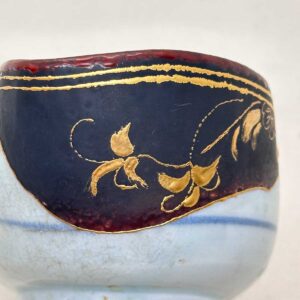
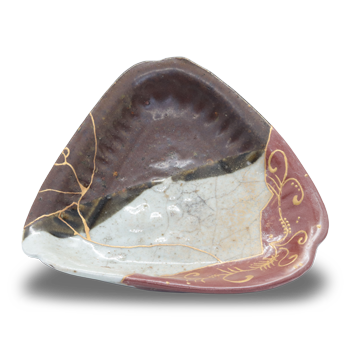
Contrast of Blue and Black: One side features the distinctive, richly textured blue underglaze (sometsuke) arabesque pattern characteristic of early Imari. The other side showcases the restored section, featuring gold maki-e lacquer work on a jet-black base. The tranquil, antique beauty of the sometsuke creates a dramatic contrast with the dynamic, dazzling brilliance of the maki-e within a single vessel.
Shoe-shaped Form: The large distortion accidentally created in the kiln has been intentionally preserved. In the tea ceremony, this distortion is called “kutsugata” and appreciated as a scenic element; this piece displays a dynamic curve that could be considered the ultimate expression of this form.
【Suggested Uses】 Though originally crafted as a tea bowl, its pronounced deformation makes it unsuitable for whisking tea. We have instead adapted it as a “mukozuke” dish, commonly used in kaiseki cuisine. Serving white fish sashimi or vibrantly colored salad dishes on it allows the ingredients to stand out beautifully against the black lacquer-like sections, lending a modern and sophisticated atmosphere to the table. It also makes an interesting sake cup or a unique small bowl.
【Specifications】
Origin/Style: Early Imari (ceramic fragment)
Techniques: Blue-and-white underglaze decoration, kintsugi (gold-joined repair), resin restoration, maki-e (lacquer decoration)
Shape: Tsubo-shaped (deformed)
Usage: Mukozuke dish, small bowl, decorative objet d’art
Comments