
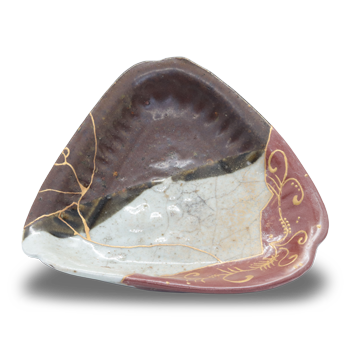
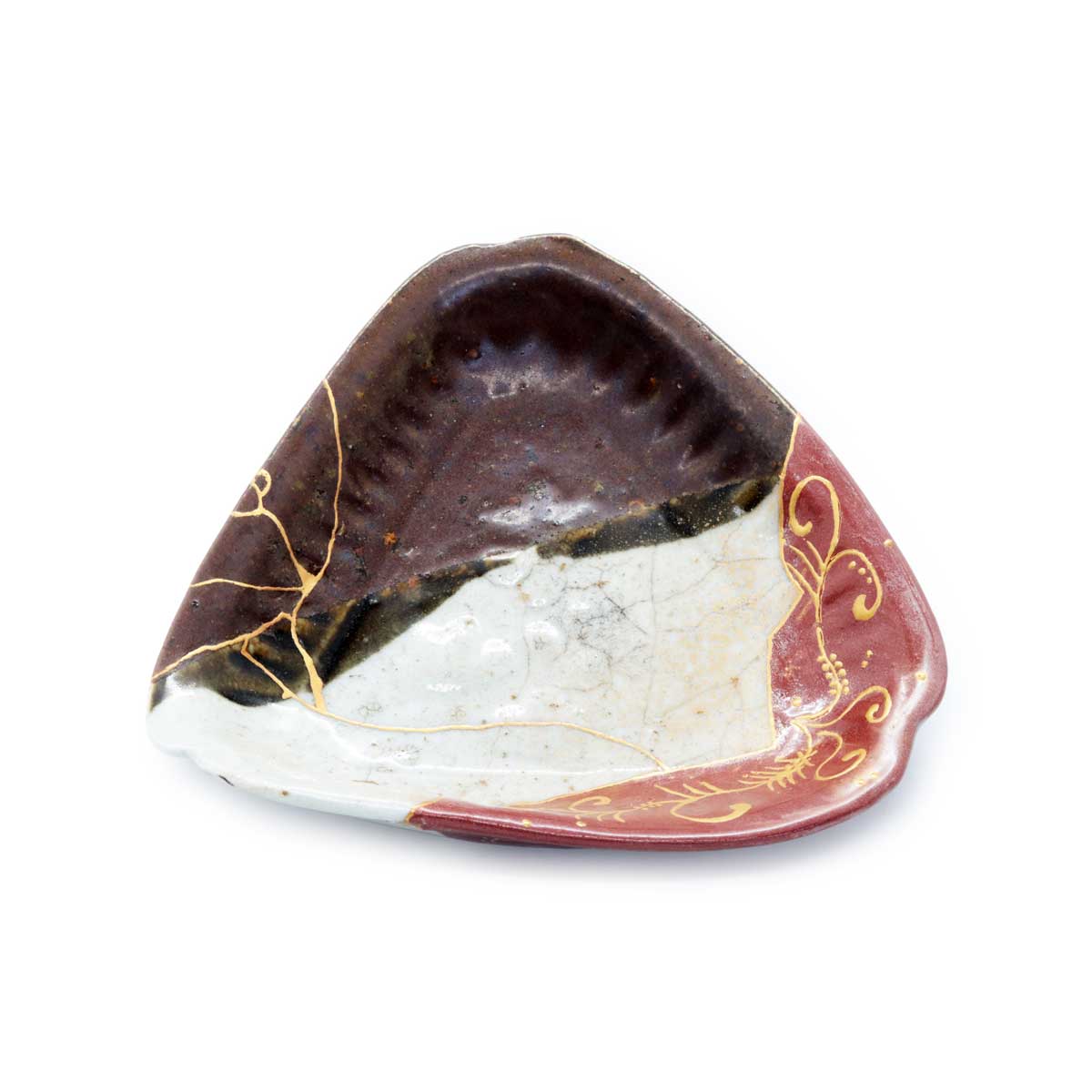
A lost corner vividly restored. A triangular hira mukozuke where the subdued beauty of early Imari resonates with vermilion maki-e.
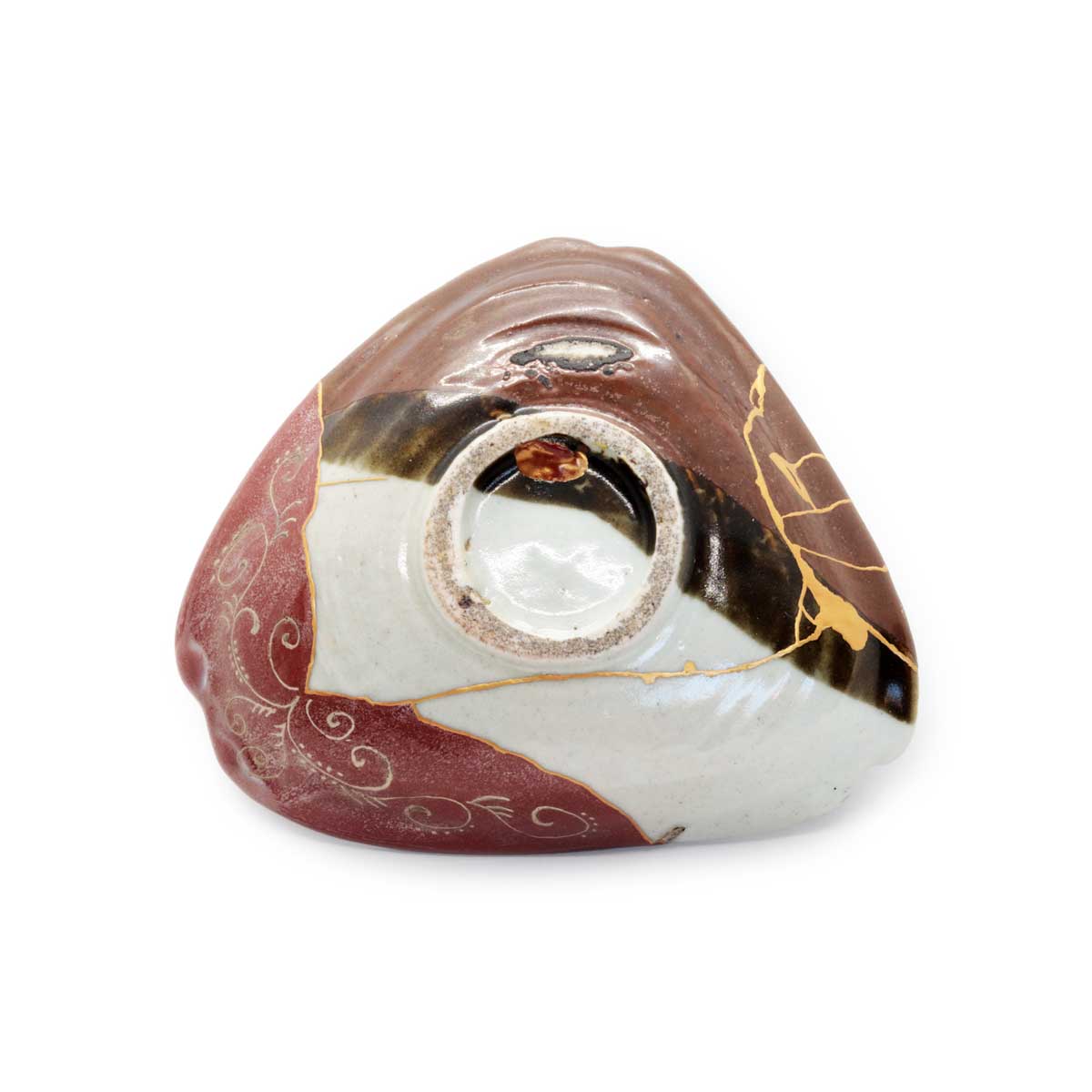
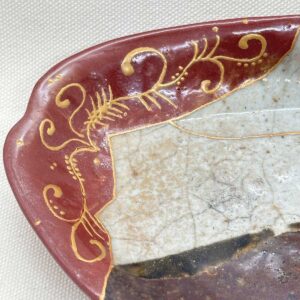
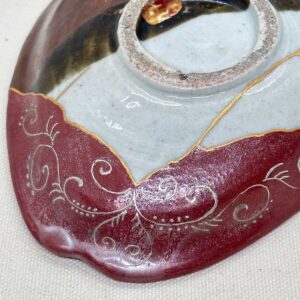
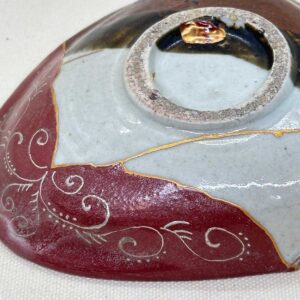
【Background】 This piece is based on an early Edo period “Early Imari” flat muko-zuke. Approximately one-quarter of the original vessel was significantly damaged, but the lost section was boldly restored using resin. By applying gold and silver maki-e over a vivid vermilion base, the unique original “triangular” form has been revived for the modern era.
【Design and Highlights】
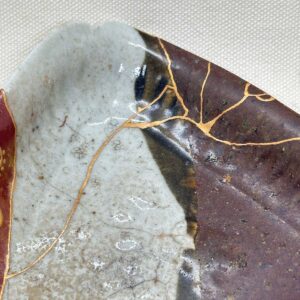
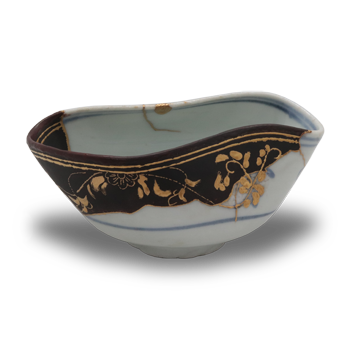
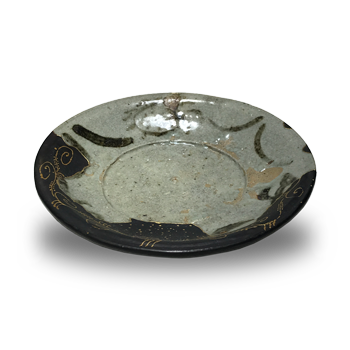
Contrast of Iron Sand and Vermilion: The original sections feature a rustic charm, with the iron sand glaze creating a tea-brown hue and the white porcelain body showcasing a beautiful layered effect. In contrast, the restored section boasts a glossy vermilion base adorned with delicate gold and silver maki-e. This bold contrast between “wabi” (austere simplicity) and “splendor” creates a new visual landscape for the vessel.
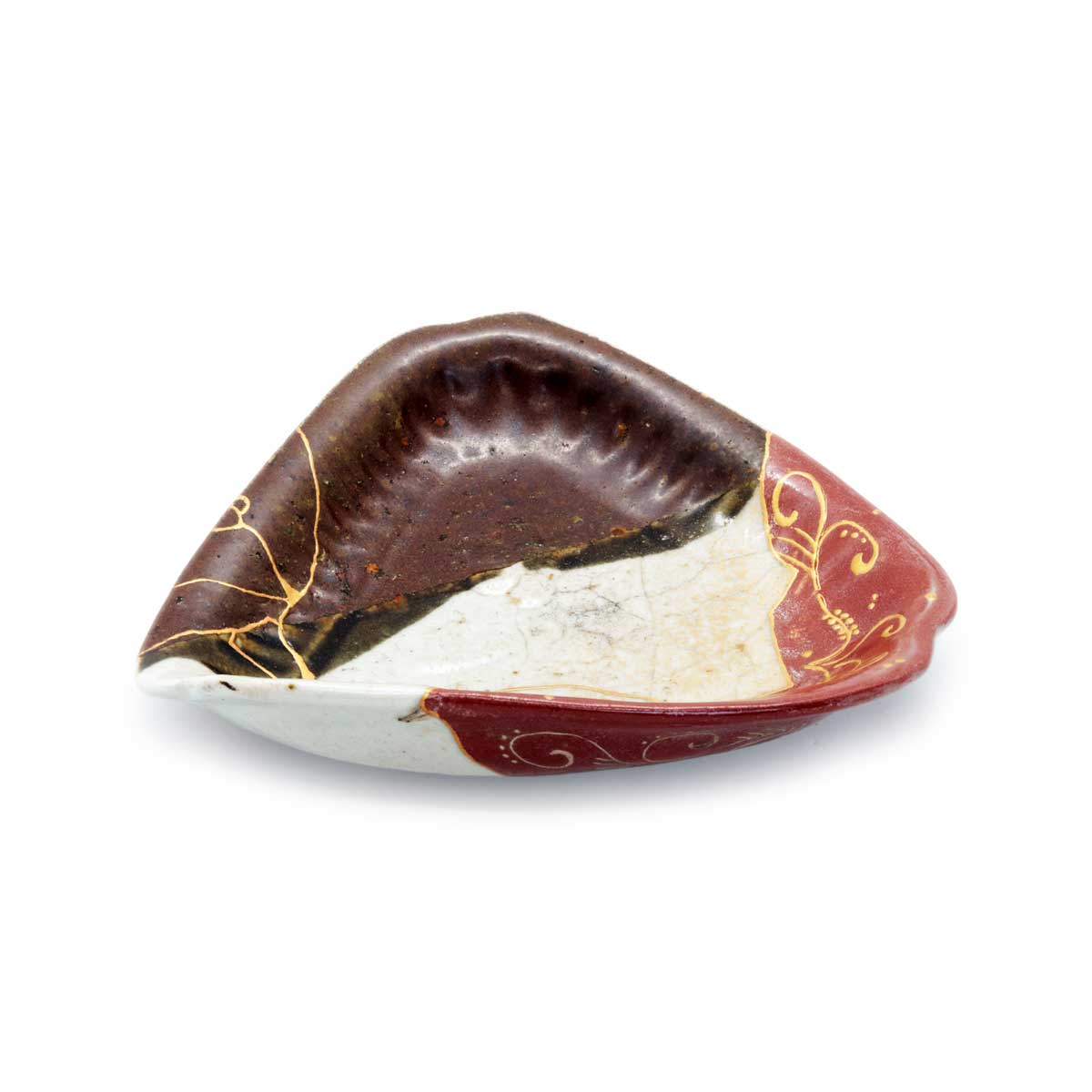
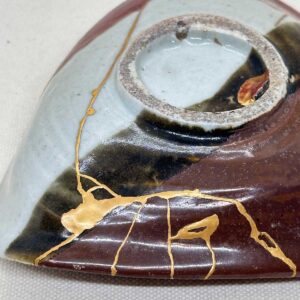
The Aesthetic of the Triangular Form: Restoring the missing corner has clearly revealed the inherent charm of this vessel’s triangular shape. Its softly rounded triangular form feels comfortable in the hand and adds rhythm to the dining table.
【Usage Suggestions】 As a flat-bottomed “hira-mukōzuke,” it’s ideal for serving sashimi or dressed salads. Enjoy it by rotating the piece to showcase the restored vermilion section as the front, or deliberately display the subdued iron-sand surface. It also makes a striking interior piece, enhancing modern Japanese spaces.
【Specifications】
Origin/Style: Early Imari (ceramic fragment)
Techniques: Iron sand overglaze, kintsugi, resin restoration, maki-e (gold/silver)
Shape: Triangular (triangular), flat serving dish
Uses: Sashimi plate, serving dish, dessert plate, decorative piece
Comments